Disturbance regimes in European forests are changing rapidly, reshaping forest structure, carbon balance and timber supply. Our research traces the drivers and impacts of these dynamics, with a primary focus on the Central European context – droughts, windthrows, bark beetle outbreaks and rising wildfire risk.

We integrate field surveys, remote sensing and process-based simulation models to address three connected areas:
1.Disturbance dynamics and drivers
How do climate, forest conditions and management interact to shape forest susceptibility to disturbance and resilience?
2.Impacts on forests and ecosystem services
How does large-scale mortality alter forest structure, biodiversity, carbon stocks and the provision of timber and other ecosystem services?
3.Recovery and resilience
How do disturbed forests regenerate, which biotic and abiotic factors govern recovery trajectories, and how is landscape-scale resilience affected by the spatial homogenisation of disturbed areas?
We map disturbance and recovery dynamics across the Czech Republic using remote sensing supported by extensive field surveys. We operate a network of approximately 1,000 repeatedly inventoried forest plots, complemented by high-resolution drone imaging. These data are combined with long-term management records from across the country to disentangle the effects of different disturbance agents and detect changes in disturbance regimes.
We specifically study the outbreak dynamics and management of the European spruce bark beetle. The Czech Republic was one of Europe’s outbreak epicentres and experienced a large-scale regime change – the transition from wind-driven to drought-driven outbreaks – with far-reaching consequences.
At the same time, the Faculty of Forestry and Wood Sciences at CZU is one of Europe’s hubs of bark beetle research, spanning management, chemical ecology and genetics and creating important research synergies.
Process-based models are essential tools for understanding how climate change, disturbances and management shape long-term forest dynamics. We actively use and contribute to the development of two ecosystem models – the individual-based forest landscape model iLand and the biogeochemical model BiomeBGCMuSo – and apply them across a range of questions in forest ecology and management.

1.Climate change impacts on forest dynamics and ecosystem services
How do a changing climate and forest management reshape species composition, productivity, carbon stocks and the provision of timber, biodiversity and other ecosystem services?
2.Disturbance interactions, resilience and forest transformations
How do biotic disturbances – including bark beetles, herbivory and invasive organisms – interact with abiotic drivers under a changing climate to drive forest transformations?
3.Management evaluation
How do harvesting regimes, salvage and sanitation logging, species mixtures and herbivory regulation affect disturbance dynamics, resilience and ecosystem services?
4.Element cycles and ecophysiology
How do carbon, water and nutrient cycles respond to climate change, climatic stress and disturbances?
5.Model development
We continuously calibrate, benchmark and structurally improve the models.
We operate iLand in three forest landscapes – one in Slovakia and two in the Czech Republic – covering both actively managed forests and a national park. We also run the model at around 100 forest plots across Czechia, representing different management histories and site conditions and supported by detailed inventory data on forest structure and biodiversity. BiomeBGCMuSo is operated across a large-scale design of simulation plots stretching from Croatia to northern Poland.
Non-native insects, pathogens and plants are reshaping forest composition, undermining ecosystem services and imposing rising costs on forest owners and society. We anchor this thematic area through the Forest Invasion Synthesis Centre, Prague (FISC) – a research hub funded by the EU Horizon Europe programme and led by Dr. Andrew “Sandy” M. Liebhold.
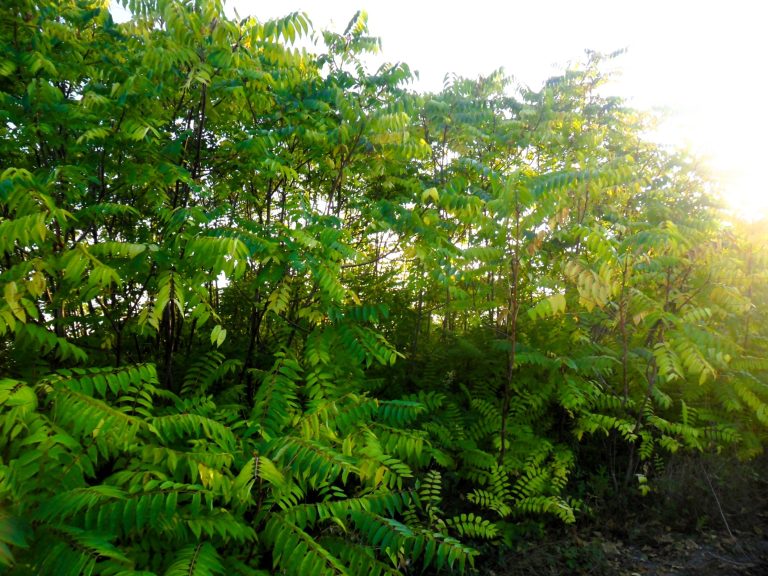
FISC integrates ecology, entomology, forest pathology, economics, data science and the social sciences to address three connected questions:
Patterns and drivers
What are the global and regional patterns of introduction, establishment and spread of non-native plants, insects and pathogens, and which biological, climatic and trade-related factors drive them?
Impacts
How do invasions alter forest structure, biodiversity and ecosystem functioning, and what economic and societal costs do they impose?
Prevention, management and mitigation
Which strategies – including biosecurity, early detection, eradication, biological control and silvicultural adaptation – work best, and how can scientific evidence be translated into operational and policy decisions?
Current research includes the outbreak dynamics of invasive forest insects, pathways of unintentional introduction and the limits of border interception data, plant–herbivore and plant–pathogen interactions in invasion success, the population and evolutionary genetics of invading species, and interactions between invasions, climate change and other forest disturbances.
A synthesis centre model
FISC applies the synthesis centre model and is, to our knowledge, the first such centre in Central and Eastern Europe dedicated to forest invasions. Rather than relying on primary field data alone, FISC brings together existing global datasets, theory and disciplinary expertise to generate new insights.
Repeated forest inventories, long-term observations, network of ca. 1,000 plots
Mapping disturbance and recovery dynamics, high-resolution imagery
iLand, BiomeBGCMuSo, future scenarios, disturbance–climate–management interactions
Integration of large datasets, theory and interdisciplinary expertise, especially through FISC